LifeChanger of the Year Nominee Profile
« Return to Nominee List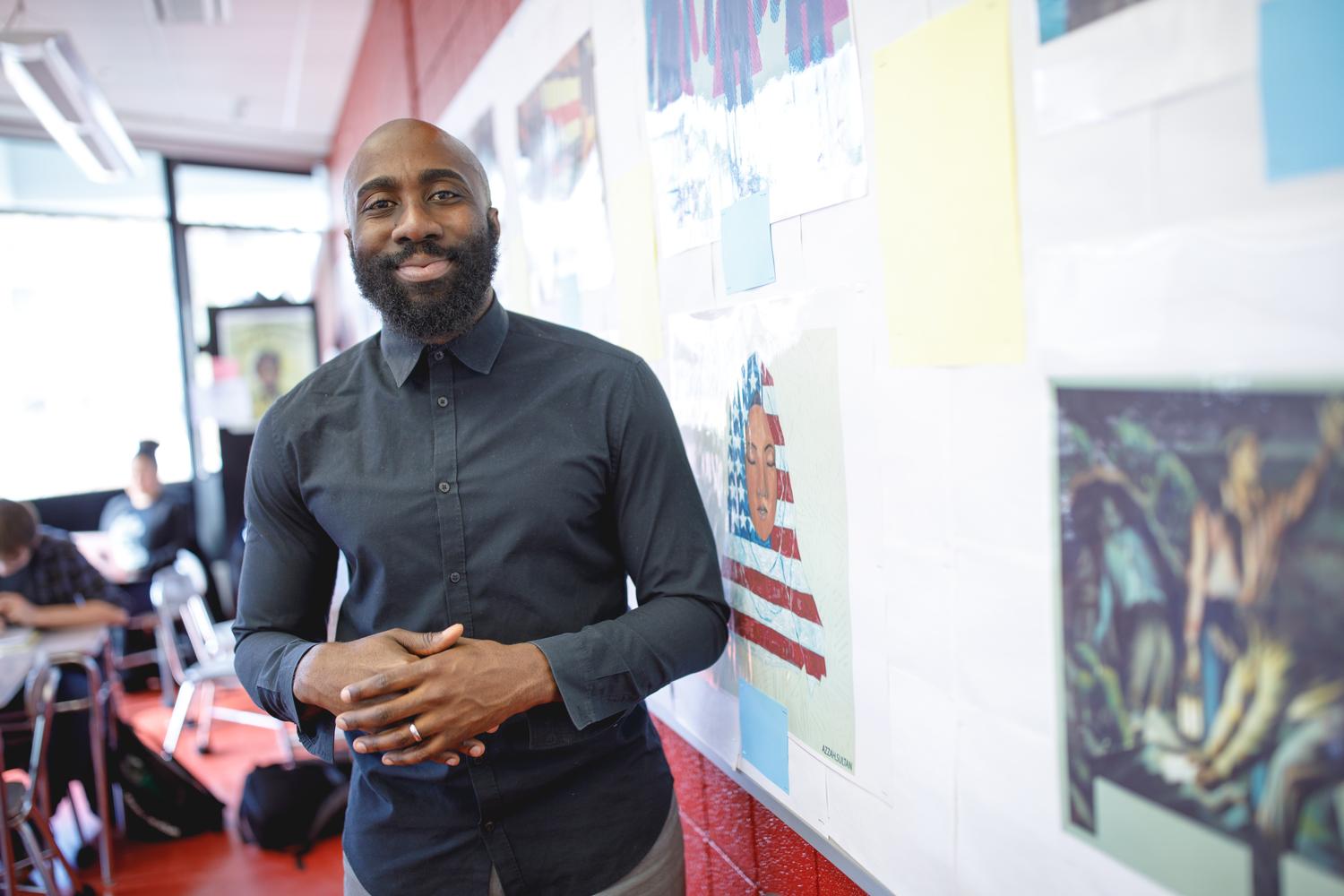
Kevin Dua
Position: History and Psychology Teacher
School: Cambridge Rindge and Latin School
School District: Cambridge Public Schools
City, State: Cambridge, MA
Kevin Dua was nominated by his colleague, Beatriz Thomas.
Mr. Dua has been teaching history for over eight years. That’s uncommon (African-American men make up only 2% of the 3+ million U.S. public school teachers) and effective. Mr. Dua was named the 2017 Massachusetts History Teacher of the Year, becoming the first African-American in the state to earn the award. He received the Massachusetts Teachers Association Human and Civil Rights award, as well as the Dr. Martin Luther King Jr. Service Award from the Wakefield Human Rights Commission. He's also an inaugural member of the Ideation4 UpLift nationwide cohort for Black male educators.
Mr. Dua's anti-racism work over the years has cultivated a more inclusive, culturally responsive climate for Black/students of color, educators, and communities. His work has received recognition by NPR, PBS, Boston Globe, the Washington Post, and he was a finalist for both National History Teacher of the Year and Massachusetts Teacher of the Year.
Mr. Dua earned his B.A. in History from William and Mary and his M.ed in Secondary Education in History from the Boston College Lynch School of Education’s Donovan Urban Teaching Scholars Program. Afterwards, he spent years serving in AmeriCorps mentoring students of color in Boston Public Schools. Since 2012, Mr. Dua has demonstrated a notable body of work in urban education, teaching throughout the greater Boston area. Within his classrooms, he has helped students critically analyze history and advocated alongside their youth-led civic engagement projects and initiatives. He advocates for centering and integrating students’ activism for mental health, human rights, and racial equity. These issues have served as accessible online curricula for schools via the Commonwealth Museum of Boston and Fred T. Korematsu Institute for Civil Rights and Education.
In working to advance social justice equity frameworks anywhere, Mr. Dua has committed to expanding such lessons outside of schools. He presents cultural responsiveness workshops at colleges, non-profits, and conferences nationwide on deeds and actions for equity and equality issues, uplifting student voices, and creating a welcoming environment for all. In 2012 and 2018, Mr. Dua ran the Boston Marathon and raised money for Boston Public Schools resources. He promoted the campaign for more teachers of color in schools as the state representative on the first-ever Nationwide All-Teachers’ Boston Marathon Team, sponsored by Hyland’s.
In 2019, in partnership with City Year and the Donovan Urban Teaching Scholars at Boston College’s Lynch School of Education, he established a scholarship for any City Year alumni seeking to become an educator in urban communities. With this scholarship, his goal is to create a pipeline for more teachers of color across the country to be prepared in emboldening youth into social justice education and becoming more involved in community building that is responsive to the academic and socio-cultural needs of urban youth and their families.
Mr. Dua's career has often shown the scars of his transformative efforts. At times, his instruction and advocacy for dismantling oppressive, inequitable, White supremacist structures in academic spaces have been racially stigmatized against him, as with other Black/educators of color. This underscores his proven leadership track record, which has guided his positive impact as a teacher of color who centers critical thinking, civic engagement, history, and agency to students.
"What makes Mr. Dua a LifeChanger for students isn't his many background accomplishments," said Thomas. "It's the way he intentionally educates his students on how they can proactively make their communities better with the skill sets they learn and are innate with. The encouragement is infectious, and students, especially Black and brown youth, put in the work to bring their aspirations to reality, to be the best version of themselves as they've always imagined themselves to be, and to be able to disrupt and dismantle White supremacist structures that disrupt and dismantle their academic spaces."